
A domain name pivot rebrand strategy uses the acquisition of a single-word .com as a public, verifiable signal that a startup has changed its business model, repositioned its category, and committed real capital to a durable brand asset. The one-word domain works as a trust anchor because it compresses the new value proposition into a memorable, exact-match, type-in-ready identifier that investors, customers, and search engines can process without confusion. When you execute it through disciplined valuation, acquisition, 301 redirect mapping, and stakeholder messaging, the move converts a risky pivot into a credible market narrative while preserving accumulated search equity.


Founders who plan this move carefully often start by reviewing a curated single-word .com inventory with clean registration history, because the quality of the asset decides how much credibility the pivot actually earns.
What is a Domain Name Pivot Rebrand Strategy?
A domain name pivot rebrand strategy is a planned sequence in which a startup acquires a new, category-defining domain name and uses it to communicate a fundamental change in its business model. The domain is not a cosmetic update. Instead, it acts as the visible layer of a deeper strategic shift.
Quick answer: A domain name pivot rebrand strategy links three things: a new business model, a new brand name, and a new primary domain. The three must arrive together, so the market reads the change as deliberate rather than accidental.
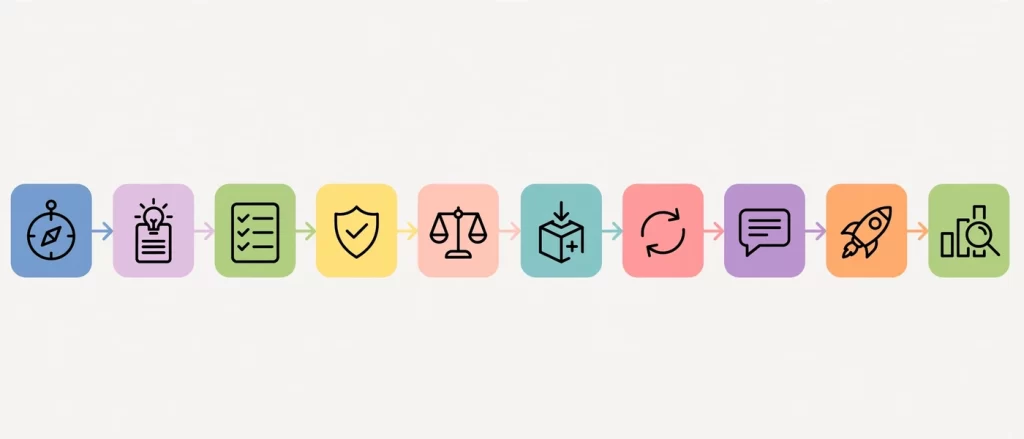
In practice, the strategy has four core components:
- The acquisition: Buying a one-word .com that matches the new positioning.
- The migration: Moving content, authority, and users from the old domain without losing search visibility.
- The narrative: Explaining why the company changed, in language customers and investors both understand.
- The proof: Showing early results that confirm the new direction works.
Consider the difference between a pivot that happens quietly and one that happens loudly. A quiet pivot changes the product but keeps the old name and domain. Customers stay confused, and investors cannot tell whether the company has really moved. A loud, well-designed pivot changes the domain, and that single change tells everyone that the old chapter has closed.
For a deeper foundation on what qualifies as a true single-word asset, the guide on what separates a genuine one-word domain from a look-alike is a helpful starting point before you commit budget.
Why Startups Pivot and Why the Name Has to Follow
Startups pivot for practical reasons. Market feedback changes, unit economics fail, a new customer segment appears, or a competitor closes off the original path. According to founder retrospectives across the industry, a large share of successful companies changed their core offering at least once before they found growth.

Common pivot triggers include:
- Customer discovery: Early users buy the product for a different reason than the team expected.
- Unit economics: The original model cannot reach profitability at scale.
- Market timing: A regulatory, technological, or cultural shift opens a better opportunity.
- Platform risk: A dependency on a single channel or partner becomes too dangerous.
- Investor direction: Capital becomes available only for a different category or model.
However, the product changes faster than the identity. Consequently, many startups carry an outdated name for years. A company that began as a “photo filter app” and evolved into an enterprise analytics platform still answers the phone with the old brand. That mismatch quietly damages trust.
The name has to follow the pivot because a name is the first data point a buyer processes. When the name describes the past, every sales conversation begins with an explanation. When the name matches the present, the conversation begins with value.
Why a One-Word Domain Signals Transformation Better Than Any Other Asset
Many assets can accompany a pivot: a new logo, a new website, a press release, or a new pricing page. Nevertheless, a one-word domain carries a different kind of weight. It is scarce, it is expensive, and it is hard to fake.
The Scarcity Signal
Only a limited number of dictionary-word .com domains exist, and most already have owners. Therefore, acquiring one shows that the startup can compete for scarce assets. Investors read that as capital discipline paired with ambition.
The Commitment Signal
Buying a premium domain requires budget approval, legal review, and executive alignment. As a result, the purchase proves that leadership has committed. A founder can change a tagline in an afternoon, but a domain acquisition takes weeks of negotiation and real money.
The Clarity Signal
A single word forces the company to choose one idea. Compound names often hedge, whereas a one-word name declares a category position. That clarity helps customers, journalists, and search engines understand what the company now does.
The Trust Signal
Research on processing fluency shows that people trust names that are easy to say, spell, and recall. A short, familiar word reduces friction at every touchpoint, from a podcast mention to a cold email. If you want the wider argument for why this naming style outperforms alternatives, the analysis of why single-word names keep winning in startup naming covers the reasoning in detail.
Bullet summary: what a one-word domain communicates during a pivot
- The company is serious and well funded.
- The old model is finished, and the new model is permanent.
- The brand intends to own a category, not just participate in it.
- The team values customer experience, from type-in traffic to voice search.

Domain Name Pivot Rebrand Strategy: One-Word vs Other Naming Options
Founders often ask whether a one-word .com is worth the premium compared with cheaper alternatives. The table below compares the main options during a pivot.
| Naming Option | Signal Strength | Memorability | Type-In Traffic | Typical Cost Range | Best Use Case |
|---|---|---|---|---|---|
| One-word .com | Very high | Very high | Strong | Mid four to low seven figures | Full business model transformation |
| Two-word compound .com | Medium | Medium | Moderate | Low hundreds to low thousands | Niche or descriptive positioning |
| Invented brand word .com | Medium to high | Depends on marketing | Weak at first | Low to mid four figures | Fully abstract brand story |
| Modified spelling (missing vowels) | Low | Low | Weak; often mistyped | Low hundreds | Tight budgets and testing |
| Alternative TLD (.io, .co, .ai) | Medium | Medium | Weak | Varies widely | Developer or AI-native audiences |
| Hyphenated domain | Low | Low | Very weak | Low hundreds | Rarely recommended |
Two lessons stand out from this comparison. First, the price gap between a premium one-word .com and a compromise option is often smaller than the cost of years of mistyped links and lost referrals. Second, the alternatives can work for testing, but they rarely deliver the same transformation signal.
Matching the Domain to the Type of Pivot
Not every pivot needs the same naming response. Some changes are dramatic; others are subtle. The table below maps common pivot types to a recommended domain approach.
| Pivot Type | What Changes | Recommended Domain Move | Priority |
|---|---|---|---|
| Customer segment pivot | Same product, new buyer (consumer to enterprise) | Acquire a professional, category-neutral one-word .com | High |
| Product pivot | New core product or feature set | Acquire a one-word .com that names the new product category | High |
| Business model pivot | Revenue model changes (ads to subscription, marketplace to SaaS) | Acquire a one-word .com and rebuild the brand around it | Very high |
| Technology pivot | New underlying platform or architecture | Keep the brand; consider a one-word product domain | Medium |
| Channel pivot | New distribution route (retail to direct-to-consumer) | Acquire a one-word .com for the new storefront | Medium to high |
| Market pivot | Geographic or vertical shift | Combine a one-word .com with selected ccTLDs | High |
The business model pivot deserves the most attention because it changes what the company sells, how it earns, and who it serves. That is exactly the situation where a new one-word domain delivers the largest signaling value.
Step-by-Step: How to Execute a Domain Name Pivot Rebrand Strategy
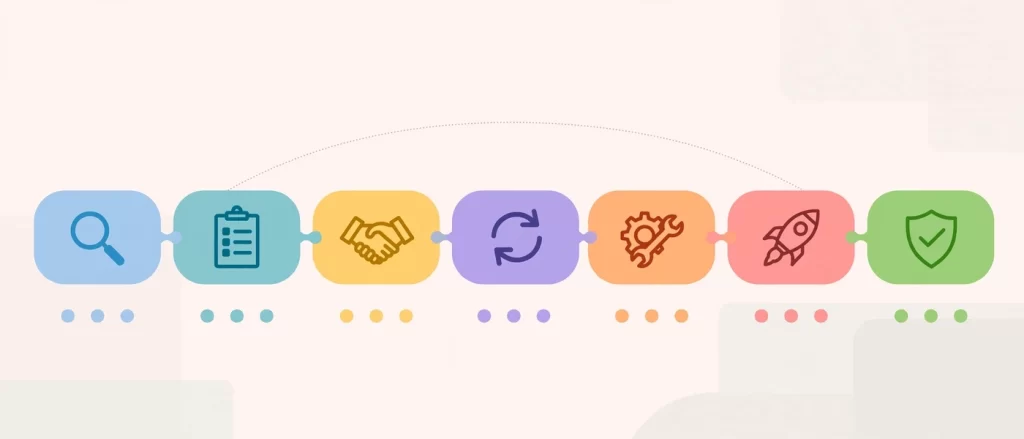
The following ten steps turn the concept into a repeatable process. Follow them in order, because each step protects the next.
Step 1: Define the Pivot in One Sentence
Write a single sentence that states what the company did before, what it does now, and for whom. If the sentence takes more than twenty words, the pivot is not yet clear enough for a naming decision.
For example: “We moved from selling design templates to providing an AI workflow platform for agencies.”
Step 2: Build a Naming Brief
Create a short document that lists the criteria for the new name. Include the following:
- The core meaning you want the word to carry.
- Tone: authoritative, friendly, technical, or premium.
- Constraints: length, pronunciation, global usability, and negative associations.
- Competitors’ names that you must avoid resembling.
Step 3: Generate and Shortlist Candidate Words
Brainstorm twenty to fifty words. Then narrow the list using a simple test: can a stranger spell it after hearing it once? Can it work in every language your market speaks? Does it avoid confusion with an existing well-known brand?
Step 4: Check Trademark and Legal Risk
Before you contact any seller, search the trademark register for conflicts in your class of goods and services. The United States Patent and Trademark Office provides official guidance and a searchable database, and similar registries exist in other regions. A domain you cannot legally use is a costly mistake.
Step 5: Value the Domain Realistically
Price discipline matters. Overpaying drains runway; underpaying can lose the asset to a competitor. A structured approach looks at length, dictionary meaning, commercial intent, comparable sales, and end-user budget. The professional approach described in this framework for valuing a one-word domain gives you a defensible range before negotiation starts.
Step 6: Acquire Through a Secure Process
Use an escrow service, verify the seller’s identity, and confirm the registration history. Moreover, document the transfer steps in writing. The full sequence, from first inquiry to final transfer, is laid out in the practical process for acquiring a one-word domain, which helps first-time buyers avoid common traps.
Step 7: Plan the Technical Migration Before Launch
A domain change is a site move, and Google publishes clear guidance on how to handle it. According to Google Search Central’s site move documentation, you should map every old URL to a new URL with permanent 301 redirects, keep the redirects in place for as long as possible, and monitor indexing in Search Console.
Your migration checklist should include:
- A full crawl of the old site to list every URL.
- A one-to-one redirect map from old URLs to new URLs.
- Updated canonical tags, sitemaps, and hreflang annotations.
- Updated internal links so they point directly to the new domain.
- Updated email authentication records (SPF, DKIM, and DMARC).
- A change-of-address request in Google Search Console.
- A rollback plan in case redirects fail.
Step 8: Prepare the Narrative Before You Announce
Write the story first and publish it second. The narrative should answer three questions in plain language: why did you change, what does it mean for customers, and what happens next? Then prepare tailored versions for customers, employees, investors, partners, and press.
Step 9: Launch in a Coordinated Window
Launch the new domain, the new brand assets, the updated product pages, and the announcement on the same day. A fragmented launch weakens the signal. In contrast, a coordinated launch gives the market one clear moment to notice.
Step 10: Monitor, Measure, and Iterate
Track rankings, referral traffic, branded search, conversion rates, and customer sentiment for at least ninety days. Small fluctuations are normal after a migration. Persistent drops, however, signal a technical problem that needs fast action.

A 90-Day Timeline for the Pivot Domain Launch
A realistic schedule keeps the team aligned and reduces last-minute risk. Use the table below as a starting template and adjust it to your company size.
| Phase | Timeframe | Key Activities | Owner |
|---|---|---|---|
| Discovery | Days 1-10 | Define the pivot, write the naming brief, set budget | Founders |
| Shortlisting | Days 11-20 | Generate candidates, check trademarks, verify availability | Brand and legal |
| Negotiation | Days 21-45 | Value the domain, approach the seller, agree on terms | Founders and advisor |
| Transfer | Days 46-55 | Escrow, payment, domain transfer, DNS setup | Operations |
| Build and test | Days 56-75 | Migrate site to staging, test redirects, prepare content | Engineering and SEO |
| Launch | Days 76-80 | Go live, announce, update profiles and listings | Marketing |
| Stabilize | Days 81-90 | Monitor indexing, fix errors, gather feedback | SEO and support |
Negotiation can move faster or slower than this plan. Therefore, build a buffer of at least two weeks into the schedule.
Communicating the Pivot to Each Stakeholder Group
A single announcement rarely satisfies everyone. Each audience listens for a different message, so tailor the story.
Customers
Customers want reassurance. They need to know that their accounts, data, and pricing remain safe. Lead with continuity, then explain the improvement. A short FAQ page and a clear redirect experience reduce support tickets.
Investors
Investors want evidence of focus. Frame the domain as part of a capital-efficient plan: the acquisition costs a defined amount and builds a permanent asset. Additionally, show that the new brand supports a larger addressable market.
Employees
Employees want purpose. Explain how the new name reflects the company’s direction, and involve them in the launch. A team that understands the reasoning becomes the most effective brand ambassador.
Partners and Resellers
Partners want stability. Give them updated logos, co-marketing guidelines, and a clear date for switching links and integrations.
Press and Analysts
Journalists want a story. The pivot narrative works best when it includes a customer insight, a market shift, and a specific proof point. A bold domain acquisition provides the concrete detail that makes the story worth covering.
Numbered messaging framework:
- State the market problem you now solve.
- Explain what changed inside the company.
- Show the new name and what it represents.
- Reassure existing users with practical continuity details.
- Invite the audience to take one clear next step.
Protecting Search Equity During the Domain Change
Search visibility is often the largest hidden asset in a startup. Therefore, the migration plan deserves as much care as the naming decision.
Definition: Search equity is the accumulated ranking strength, backlink authority, and indexed content that a domain earns over time.

Follow these practices to keep search equity intact:
- Use 301 redirects: Permanent redirects pass most signals from old URLs to new ones.
- Keep URL structures similar: Matching paths make mapping simpler and reduce errors.
- Update high-value backlinks: Ask top referring sites to point to the new domain.
- Maintain content quality: Google’s guidance on creating helpful, reliable, people-first content reminds site owners that useful content, not technical tricks, earns lasting visibility.
- Avoid changing everything at once: If possible, migrate the domain first and redesign content afterward.
- Monitor in Search Console: Watch for crawl errors, coverage drops, and unexpected 404 pages.
A pivot also brings a chance to improve topical focus. Because the business model changed, some old pages no longer fit. Consolidate or retire them carefully, and redirect them to the closest relevant page rather than the homepage.
Google’s current guidance also emphasizes experience, expertise, authoritativeness, and trustworthiness. Consequently, the new site should show clear authorship, transparent company information, and real evidence of the new offering. A domain change without substance will not restore trust.
How to Measure Whether the Pivot Signal Worked
Traffic alone no longer tells the full story, particularly as AI-generated answers reduce clicks for informational queries. Instead, measure business outcomes that reflect trust and demand.
| Metric | What It Shows | Healthy Direction After Launch |
|---|---|---|
| Branded search volume | Growing awareness of the new name | Upward within 60-90 days |
| Direct and type-in traffic | Memorability of the one-word domain | Upward over six months |
| Qualified leads | Fit between the new model and the market | Stable or rising |
| Sales cycle length | Reduced explanation time | Shorter |
| Referring domains | Recognition from partners and press | Upward |
| Customer sentiment | Acceptance of the change | Neutral to positive |
| Cost per acquisition | Efficiency of paid and organic channels | Stable or lower |
Set a baseline before the launch. Then compare results at thirty, sixty, and ninety days. If branded search grows but conversions lag, the naming succeeded while the offer or landing pages need work.
Common Mistakes in a Domain Name Pivot Rebrand Strategy

Even experienced teams stumble on the same avoidable problems. Watch for these:
- Announcing before owning. Never publish the new name before the domain transfer completes. A leak can raise the price or lose the deal.
- Skipping the trademark check. A great domain with a legal conflict becomes a liability.
- Overpaying without a valuation. Emotional attachment to a word leads founders to ignore comparable sales.
- Forgetting redirects. Missing 301 mappings cause traffic loss and broken backlinks.
- Changing the domain but not the story. A new name with the same confusing message adds cost without clarity.
- Ignoring email authentication. New sending domains without proper records land in spam.
- Abandoning the old domain. Let the old registration expire, and someone else may capture the traffic. Renew it for years.
- Neglecting internal alignment. Employees who hear about the change from a press release feel disconnected.
- Using expired-domain tricks. Google’s spam policies specifically target abuse of expired domains, so buy assets for genuine brand use only.
- Launching without a measurement plan. Without baselines, the team cannot prove the pivot worked.
Expert Tips for a Smoother Transformation

These practical insights come from patterns that repeat across domain-led rebrands:
- Negotiate through an intermediary. A broker or advisor hides your identity and keeps the price anchored to market data.
- Secure variations early. Register common misspellings, plural forms, and key social handles before the announcement.
- Test the name aloud. Say it in a phone call, a pitch, and a podcast intro. If listeners ask you to spell it, reconsider.
- Sequence the launch around a milestone. Pair the announcement with a product release, funding round, or customer win so the story feels earned.
- Keep a legacy bridge. Use a short banner such as “Formerly [Old Name]” for six to twelve months so returning users recognize you.
- Document the domain as a balance sheet asset. A premium domain can appreciate, which supports the capital efficiency argument with investors.
- Prepare your support team. Give them a script and an FAQ before launch day.
- Review annually. Revisit the naming fit as the company grows, since the right word today should still work after the next stage.
Budgeting the Pivot: What the Total Cost Really Includes
The domain price is only one line item. A realistic budget covers the full transformation.
| Cost Category | Typical Components | Planning Note |
|---|---|---|
| Domain acquisition | Purchase price, escrow fees, broker fees | Often the largest single cost |
| Legal | Trademark search, filing, contract review | Do this before negotiation |
| Brand identity | Logo, color system, guidelines | Scale to company size |
| Website and migration | Design, development, redirect testing | Allow contingency |
| Marketing launch | Announcement, paid support, PR | Tie to a clear milestone |
| Operations | Email, signatures, printed materials, integrations | Easy to overlook |
| Contingency | Unexpected fixes and delays | Reserve 10-15% |
If you want to think of the domain as a long-term asset rather than an expense, the approach to building a diversified one-word domain portfolio shows how professional buyers frame acquisition value over time.
Global Considerations: One-Word .com or Regional Domains?
A pivot often widens the market. As a result, the domain question becomes international. A single global .com usually anchors the brand, while country-code domains can support local trust.
- Lead with the .com for brand consistency and global recall.
- Add ccTLDs selectively where local regulation, language, or buyer preference demands it.
- Redirect smartly: Send regional domains to the right language version rather than a generic page.
- Check word meaning across languages. A word that sounds premium in English can carry an unintended meaning elsewhere.
The comparison in one-word .com versus country-code domains for global expansion explains how to balance both approaches. For ownership rules, transfer policies, and registrant rights, the Internet Corporation for Assigned Names and Numbers publishes authoritative resources.
Illustrative Scenarios: Pivot Types in Practice

The following composite scenarios show how the strategy works. They are illustrative examples, not case studies of specific companies.
Scenario 1: From Consumer App to Enterprise Platform
A team built a consumer scheduling app, then discovered that companies paid ten times more for team-level features. The original name sounded playful and limited. After acquiring a one-word .com that meant “coordination,” the company repositioned as an enterprise product. Sales calls began with credibility instead of apologies.
Scenario 2: From Marketplace to Software
A niche marketplace struggled with thin margins. The founders pivoted into selling the underlying software to other marketplace operators. A one-word domain that named the software category told prospects that the company was now a technology vendor, not a competitor.
Scenario 3: From Services to Product
An agency productized its best internal tool and needed a brand that stood apart from the agency name. A short, neutral one-word .com gave the product independent identity and made partnerships easier.
Common thread: In each scenario, the domain did more than provide an address. It carried the new promise into every email, link, and conversation.
Frequently Asked Questions About Domain Name Pivot Rebrand Strategy
What is a domain name pivot rebrand strategy?
A domain name pivot rebrand strategy is a planned approach in which a startup acquires a new domain, usually a one-word .com, to signal a change in its business model. It combines naming, migration, and messaging so the market understands the change as deliberate.
Why does a one-word domain work better than a compound name during a pivot?
A one-word domain is scarce, memorable, and clear. Consequently, it signals capital strength and category ownership, while compound names often sound descriptive and limited. The single word also reduces spelling errors and improves word-of-mouth referrals.
How long does a domain-led rebrand usually take?
Most teams need roughly 60 to 90 days from naming brief to launch. Negotiation and technical migration are the two phases most likely to run long, so build in buffer time.
Will changing my domain hurt my SEO?
A poorly managed change can cause temporary ranking drops. However, a well-planned migration with one-to-one 301 redirects, updated sitemaps, and Search Console monitoring preserves most search equity. Google’s site move guidance explains the recommended process.
How much should a startup spend on a one-word domain?
The right budget depends on length, meaning, commercial value, and comparable sales. A structured valuation prevents overpaying. As a rule, compare the price against the cost of ongoing brand confusion and lost referral traffic.
Should I keep my old domain after the pivot?
Yes. Keep the old domain registered and redirected for as long as possible, ideally for several years. This protects backlinks, prevents competitors from capturing the traffic, and helps returning customers find you.
Do I need a trademark check before buying a domain?
Absolutely. A domain does not grant trademark rights, and a conflict can force you to rebrand again. Search the relevant trademark register before you begin negotiations.
Can I use a country-code domain instead of a .com?
You can, and it works well for local markets. Nevertheless, a one-word .com remains the strongest global anchor for a brand that expects international growth.
How do I announce a pivot without confusing customers?
Lead with continuity, explain the benefit, and provide a clear timeline. Use a short FAQ page, a temporary “formerly” label, and direct redirects so users always land in the right place.
What is the best way to know if the pivot signal worked?
Track branded search, direct traffic, qualified leads, sales cycle length, and customer sentiment at thirty, sixty, and ninety days. Together, these metrics show whether the market accepted the new positioning.
Conclusion: Make the Domain Do the Talking
A domain name pivot rebrand strategy gives a startup something rare: a way to prove a strategic change rather than merely announce it. The one-word domain shows commitment, sharpens positioning, and reduces friction in every customer touchpoint. Moreover, when you combine it with careful valuation, secure acquisition, clean redirects, and a well-told story, it protects the search equity you spent years building.

Remember the core sequence: define the pivot, choose the word, verify the legal position, acquire the asset securely, migrate with discipline, launch in one coordinated moment, and measure what matters. Skip a step, and the signal weakens. Follow all of them, and the market sees a company that knows exactly where it is going.
If your business model has changed and your name still describes the old one, now is the right time to secure a one-word domain that carries your new business model and turn your pivot into a confident, credible market moment.